San Francisco's AI Boom Is Real. So Is the Rent Spike That Came With It.
August 6, 2026
August 6, 2026
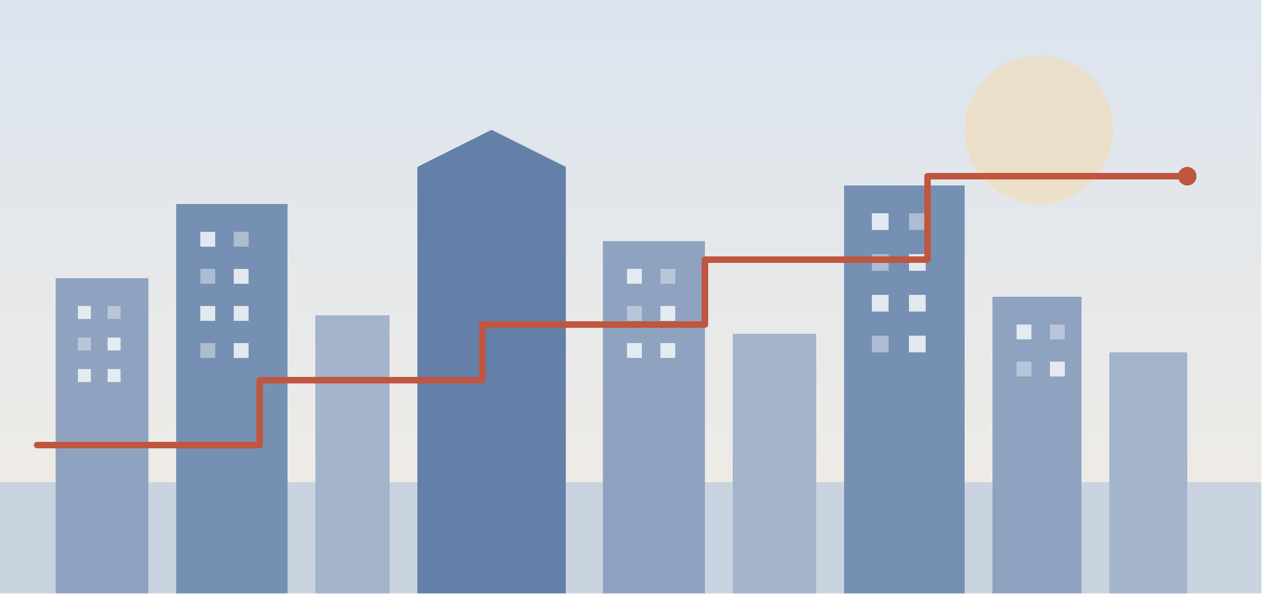
San Francisco's economy is bouncing back — and the city's own numbers show exactly who's paying for it first.
A new economic snapshot from the San Francisco Controller's Office, released this week, credits much of the city's turnaround to the AI investment boom. Office vacancy is falling, leasing activity is up, and the mayor has pointed to AI as the driving force behind a broader economic recovery. But the same report shows rents climbing far faster than jobs — and outside of healthcare and tourism, hiring has barely moved.
Asking rents on empty apartments jumped 14% between March and July. Home prices are rising at double-digit annual rates even as prices fall elsewhere in California. Office vacancy dropped nearly 4 percentage points over the past year — still elevated compared to pre-pandemic norms, but moving in the right direction for the first time in years.
San Francisco's chief economist, Ted Egan, says AI investment is likely fueling most of the private-sector growth, even though tech employment gains look modest — AI is adding jobs in some places while eliminating them in others.
The office market tells a similar story. According to commercial real estate firm JLL, AI companies signed just two office leases in San Francisco in 2020. By early last year, that number had climbed to 167, with AI firms' office footprint nearly doubling between 2022 and 2024. JLL's Alexander Quinn notes that while the biggest leases account for most of the square footage, the leasing activity itself is broad-based — not just a handful of giant tenants.
Here's where it gets more complicated. A 14% jump in asking rents doesn't mean existing tenants are paying 14% more — most San Francisco renters are protected by rent control and won't feel that spike directly.
But anyone forced to sign a new lease — because of eviction, a job relocation, an owner move-in, or the end of a fixed-term contract — pays whatever the market is asking right now. Quintin Mecke of the Council of Community Housing Organizations argues that's exactly where the pain shows up: not in headline rent averages, but in the widening gap between what long-term tenants pay and what new tenants are charged. That gap, he says, is where displacement happens.
The data backs this up. In 2024, the U.S. Census Bureau put San Francisco's median contract rent at $2,348, while rental-listing estimates ran roughly 15% higher — a gap that tends to widen during boom periods.
While rents are moving fast, housing permits aren't. The city attributes some of that lag to the normal time it takes for supply to respond to demand. But housing advocates see something more structural: rental demand can shift in months, while new housing can take years to move from approval to occupancy — meaning there's no way for supply to catch up with a sudden rent spike in real time.
San Francisco has recently cut inclusionary housing requirements and impact fees on new development, betting that lower costs will unlock construction. City officials point to early signs of projects moving forward. But Janan New of the San Francisco Apartment Association says the bigger obstacle is the rising cost of construction itself, compounded by high interest rates — a combination that's made this a difficult moment for developers regardless of fee structure.
Meanwhile, unemployment in the city sits at 3.7% and is trending down — but that improvement is being carried by healthcare and tourism, not tech. Labor advocates have raised concerns about restaurant, hotel, and construction workers being priced out of the city they work in.
Not everyone agrees on what the data means. To some in commercial real estate, San Francisco's cycle of booms and busts is simply the city's nature — proof of resilience, not a warning sign. To housing advocates, the concern is that displacement doesn't reverse when the market cools: people priced out in past booms generally don't come back: wealthier residents take their place instead.
Longtime housing-industry observers note this isn't a new story — San Francisco saw similar dynamics during the dot-com boom of the late 1990s. What's different now, some say, is that the cost of everything — construction, utilities, groceries — is higher across the board, squeezing property owners and tenants alike.
The bottom line: San Francisco's AI-driven recovery is showing up clearly in office leasing and rental prices. Whether it shows up in broad-based job growth and affordable housing remains, by the city's own numbers, an open question.
Source: The San Francisco Standard, "The AI boom is reshaping San Francisco's economy. Renters are feeling it first," by Jennifer Wadsworth.
Recent
Browse our blog posts to be in the know.













Provided Courtesy of Ascend Real Estate
Provided Courtesy of Ascend Real Estate

Provided courtesy of Ascend Real Estate



Welcome to our September newsletter, where we’ll discuss residential real estate trends in the East Bay and across the nation. This month, we’ll examine the state of t… Read more
The Big Story What to expect when you’re expecting inflation Quick Take: The number of homes sold in 2021 is set to be one of the highest on record. Inflation reached … Read more

Welcome to our September newsletter, where we’ll discuss residential real estate trends in Silicon Valley and across the nation. This month, we’ll examine the state of… Read more

Welcome to our September newsletter, where we’ll discuss residential real estate trends in San Francisco and across the nation. This month, we’ll examine the state of … Read more

As we end another crazy year, we are very grateful our kids are finally fully vaccinated, and a return to some sense of normalcy is in view. We are especially looking … Read more




Summer is here, and so are the boozy slushies, all-you-can-eat tacos and double cheeseburgers

The Big Story Where can home prices go from here? Quick Take: Home prices appreciated faster in 2021 than at any other time, even surpassing the 2004–2006 housing bubb… Read more


No doubt 2021 Bay Area housing markets was one of the wildest in recent memory! Our local real estate experts will share their year-end analysis of San Francisco, East… Read more
You’ve got questions and we can’t wait to answer them.